

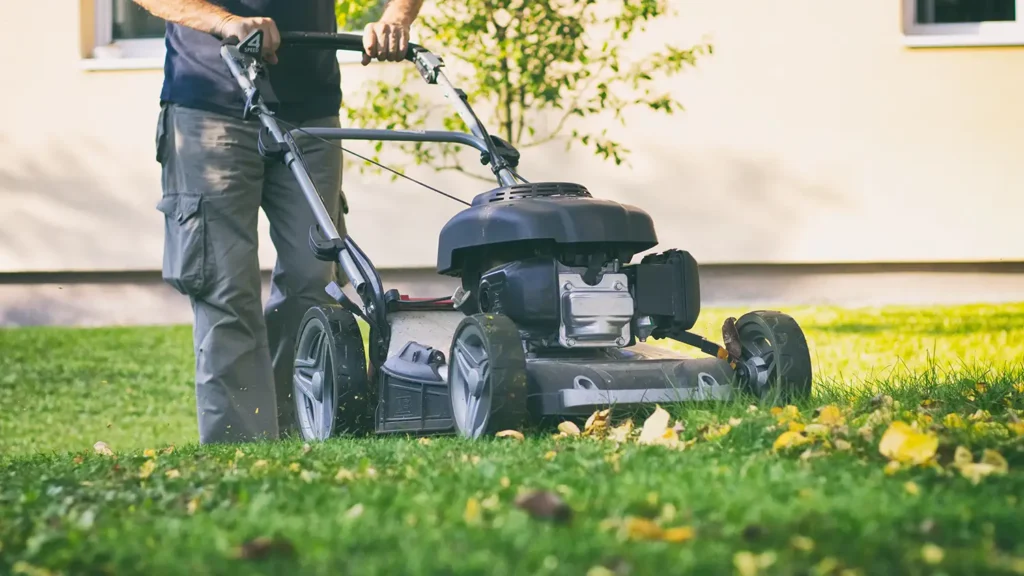
The last mow before winter should follow your lawn’s growth, not an arbitrary date on the calendar. Northern Utah cool-season lawns can keep growing long after cool nights arrive, and a warm fall spell may extend mowing beyond what you expected.
Watch how much the grass grows between cuts. Knowing when to stop mowing lawn Utah yards comes down to watching local growth trends and temperature changes. As growth slows, mowing usually becomes less frequent. Once growth stops, there is no reason to keep cutting simply because it is your normal weekend routine.
Keep Mowing While Grass Is Growing
Common Northern Utah cool-season lawns, such as Kentucky bluegrass and tall fescue, remain active during fall conditions. Standard turfgrass guidance recommends continuing routine fall lawn mowing until active growth completely stops.
A higher-elevation property can reach that point earlier than a warmer, sheltered yard. Sun exposure, irrigation, and the season’s weather also influence what happens.
Check the lawn rather than copying a neighbor’s schedule. If it has grown enough to need mowing and conditions are suitable, another cut may be appropriate.
Gradual Adjustments as Growth Slows
As part of your winter lawn preparation Utah strategy, fall mowing shifts from a fixed weekly schedule to a needs-based routine. You may find that a week or two produces very little new leaf growth compared with late summer.
Measure or observe the grass before deciding to mow. Avoid removing an excessive amount at once. If the lawn has become too tall, bring it back toward an appropriate height gradually.
Keep equipment maintained and blades sharp. A clean cut is preferable to tearing the leaf blades with dull equipment.
Avoiding Extremely Short Cuts
A final lawn mowing before winter is not an invitation to scalp the turf. Cutting too low stresses root systems and leaves the lawn poorly prepared for freezing conditions.
The appropriate height depends on the grass type and management plan. If a modest adjustment is recommended, make it gradually and avoid removing too much leaf tissue in one pass.
At the other extreme, leaving excessively long grass can cause it to mat beneath heavy snow cover, encouraging fungal diseases like snow mold. Aim for a suitable maintained height rather than the shortest or tallest possible cut.
Ask for guidance if you do not know your grass type or the mower setting that corresponds to the intended height.
Wait for Suitable Surface Conditions
The first frost does not necessarily mean mowing is finished for the year. It does mean you should pay attention to the condition of the turf before walking or driving equipment across it.
Avoid mowing frost-covered or frozen grass. Wait until frost has cleared and the surface is suitable. Wet or saturated conditions can also make mowing a poor choice.
If snow arrives before a planned cut, do not try to force mowing under unsuitable conditions. Reassess after the weather changes and seek advice if heavy matting or other issues remain.
Sharp Blades, Leaves, and Final Clippings
Always keep mower blades sharp for late-season passes. Clean cuts prevent frayed grass ends that turn brown and invite disease. In addition, ensure excessive leaf removal takes place so light reaches the turf grass before snowfall.
Light leaf material may be managed differently from a deep, wet accumulation. Remove excessive debris, and avoid leaving clumps that smother grass.
When handling final clippings, fine clippings from ordinary mowing can remain to mulch naturally. However, bag or remove heavy clumps and thick leaf debris so they do not smother grass crowns during winter dormancy.
Coordinate Late-Season Mowing With Winterization
Mowing is just one part of your late-season routine. To learn more about full seasonal care, check out our guide on lawn tips and comprehensive winterizing lawn care steps.
Follow specific timing recommendations for lawn treatment applications alongside mowing. Proper scheduling ensures both your final trim and fertilization deliver maximum health benefits for spring green-up.
Keep a note of when growth actually stops on your property. It can be a helpful reference next year, while still allowing for different weather.
When should I stop mowing my lawn in Utah?
Explore our complete lawn care offerings or sign up for a tailored lawn maintenance program. Contact Lawngevity for a free estimate to ensure your property is ready for winter.
When should I stop mowing my lawn in Utah?
When should I stop mowing my lawn in Utah?
Stop when the grass stops growing, accounting for your location and current conditions. There is no single statewide date.
When should I stop mowing my lawn in Utah?
Maintain an appropriate height for the turf, with only a gradual adjustment if recommended. Avoid scalping.
What if grass is too long under snow?
Long blades may mat and contribute to unfavorable conditions. Address excessive growth before snow when conditions allow.
Can I mow after the first frost?
Potentially, if growth continues. Wait until the grass is free of frost and the surface is suitable.
Should I bag the final clippings?
Remove heavy clumps and excessive debris. Fine, evenly distributed clippings may be handled according to the lawn’s condition and care guidance.