

Spring has officially arrived, and while the sight of greening grass is a welcome change after a long winter, it often brings some uninvited guests. For homeowners looking to maintain a pristine landscape, the most effective strategy is to partner with a professional lawn and weed service that understands the specific biological shifts occurring in the soil during this transition. April is a critical month in the lifecycle of your yard; as ground temperatures rise, both your desired turfgrass and various opportunistic weeds begin their race for dominance. Identifying these invaders early is the secret to ensuring your lawn remains lush and healthy throughout the summer.
Why April is the Make-or-Break Month for Weed Control
In the world of lawn care, timing isn’t just important—it’s everything. April represents a biological sweet spot. The soil has typically warmed to a consistent 55°F, which triggers the germination of many common weeds.
If you miss the window for treatment in April, you aren’t just dealing with a few eyesores; you’re allowing weeds to establish deep root systems and produce thousands of seeds that will haunt your lawn for years to come. This is where a specialized lawn and weed service becomes invaluable, applying pre-emergent barriers and targeted post-emergent treatments to stop the invasion before it takes hold.
Common April Weeds: The Rogues’ Gallery
Identifying what is growing in your yard is the first step toward reclaiming it. Here are the most common weeds you will likely spot emerging this month.
1. Dandelions (Taraxacum officinale)
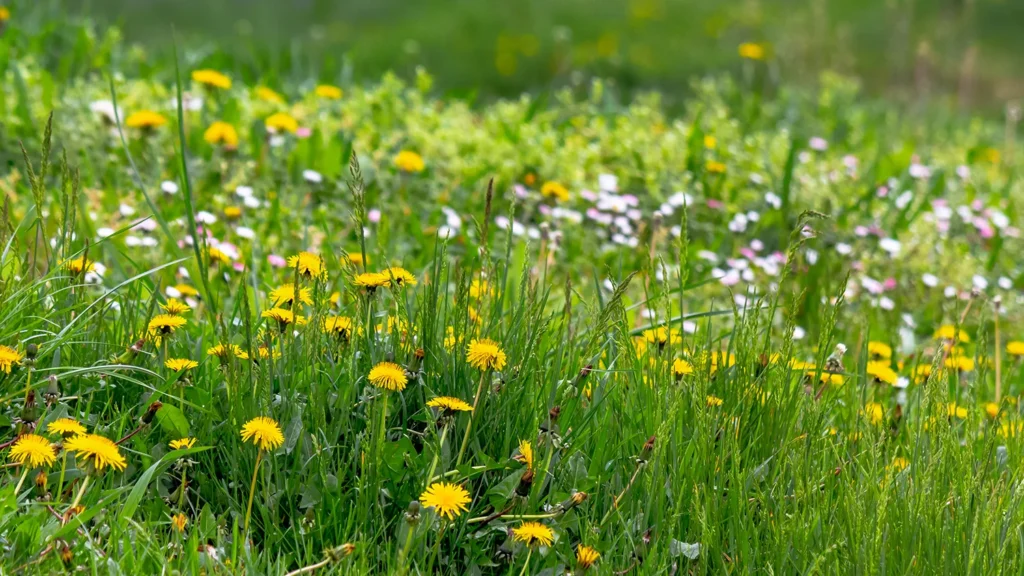
Perhaps the most iconic lawn weed, the dandelion is a perennial that thrives in April. While the bright yellow flowers might seem harmless, their deep taproots can extend up to 10 inches into the ground. Once the flower turns into a white puffball, a single plant can disperse thousands of seeds across your neighborhood.
2. Common Chickweed (Stellaria media)
This winter annual loves the cool, moist conditions of early spring. It forms thick, mat-like patches that can quickly smother your grass. You can identify chickweed by its small, succulent leaves and tiny, star-shaped white flowers.
3. Henbit and Purple Deadnettle
Often confused for one another, both of these weeds belong to the mint family and feature square stems. They produce vibrant purple flowers in April that can make an untreated lawn look like a purple field. While bees love them, they are a sign that your turf is thinning and needs professional intervention.
4. Hairy Bittercress
If you’ve ever stepped near a weed and felt tiny seeds explode onto your legs, you’ve met Hairy Bittercress. This weed grows in a basal rosette and launches its seeds via an elastic mechanism, making it incredibly difficult to contain without a comprehensive lawn and weed service plan.
The Science of Soil Health and Weed Suppression
Weeds are often symptoms of underlying soil issues. For example, dandelions prefer acidic soil, while chickweed thrives in compacted, poorly drained areas. Simply pulling the weed doesn’t solve the problem if the environment is still inviting.
A professional approach involves more than just spraying; it involves balancing the soil’s pH and improving its structure. According to the Soil Science Society of America, healthy soil structure allows for better water infiltration and root growth, which inherently crowds out weed species. When your grass is thick and healthy, it acts as a natural mulch, preventing sunlight from reaching weed seeds.
The Benefits of Professional Lawn and Weed Service
Many homeowners attempt the DIY route with store-bought concentrates, only to find their lawn burnt or the weeds returning two weeks later. Here is why professional care makes the difference in April:
Customized Chemical Application
Not all weeds respond to the same herbicide. Some require selective broadleaf control, while others (like crabgrass) require pre-emergent applications before they even sprout. Professionals have access to commercial-grade products that are more effective and safer for your specific grass type.
Calibrated Equipment
Consistent coverage is key. Professional technicians use calibrated spreaders and sprayers to ensure that every square inch of your lawn receives the exact dose required—no more, no less. This prevents striping and chemical runoff.
Integrated Pest Management (IPM)
A high-quality lawn and weed service doesn’t just treat the grass; it monitors for signs of grubs, fungus, and nutrient deficiencies. By addressing these factors in April, you build a resilient ecosystem that can withstand the heat of July and August.
Essential April Lawn Care Tips for Homeowners
While the pros handle the heavy lifting, there are several things you can do to support your lawn’s health this month:
- Sharpen Your Mower Blades: Dull blades tear the grass instead of cutting it, leaving it vulnerable to disease and making it look brown.
- Adjust Mowing Height: Don’t scalp your lawn. Keeping your grass slightly taller (around 3 to 3.5 inches) helps shade the soil and prevents weed seeds from germinating.
- Proper Watering: Instead of frequent light watering, aim for deep, infrequent sessions. This encourages your grass to grow deep roots, which helps it compete against shallow-rooted weeds.
- Clear Debris: Remove any remaining piles of leaves or fallen branches. These create damp, dark spots that are breeding grounds for fungi and specific types of weeds like moss.
Breaking the Weed Cycle
The goal of a successful spring treatment isn’t just to kill the weeds you see today, but to break the reproductive cycle. Many of the weeds you see in April are actually winter annuals that germinated last fall. By treating them now, you prevent them from dropping seeds that would sprout next September.
Furthermore, April is the time to apply pre-emergent herbicides for crabgrass. Crabgrass is a summer annual that begins to germinate when soil temperatures hit roughly 55-60°F for several consecutive days. If you wait to see crabgrass, it’s already too late for the most effective control methods.
Why Choose Lawngevity for Lawn and Weed Service?
At Lawngevity, we don’t believe in a one-size-fits-all approach. We recognize that every yard has its own microclimate, soil composition, and weed pressure. Our April services are specifically designed to jumpstart your lawn’s metabolism, providing the nutrients it craves while aggressively targeting the invasive species that threaten its beauty.
Our team of experts stays updated on the latest horticultural trends and environmental regulations, ensuring that your lawn isn’t just the greenest on the block, but also a safe environment for your family and pets.
Our April Checklist Includes:
- Full Lawn Analysis: Identifying specific weed species and soil health.
- Pre-emergent Barrier: Stopping crabgrass and other summer annuals in their tracks.
- Broadleaf Control: Targeted treatment for dandelions, clover, and chickweed.
- Slow-Release Fertilization: Providing a steady stream of nitrogen for sustained greening.
Conclusion
Don’t let the April showers bring nothing but a harvest of weeds. By recognizing the early signs of weed emergence and understanding the biological needs of your turf, you can set the stage for a stunning outdoor space all year long. A beautiful, weed-free lawn is an investment in your home’s curb appeal and your own peace of mind.
Ready to stop the weeds before they take over? Let the experts handle the dirty work so you can spend your weekends enjoying your yard instead of weeding it.
Contact Lawngevity today for a free estimate and discover why we are the premier lawn and weed service for homeowners who demand excellence. Let’s make your lawn the envy of the neighborhood!